

ADAS Calibration After a Collision: What It Is and When Your Vehicle Needs It in Northeast Ohio
12th Oct 2026 by Posted by D&S Automotive
By an I-CAR-Certified Estimator, D&S Automotive
ADAS calibration is the process of realigning a vehicle's driver assistance cameras, radar units and sensors to the manufacturer's specification after a collision repair has disturbed them or the panels they are mounted to. It is required whenever a sensor is removed or repositioned, when bumpers, mirrors, glass surrounds, structural components or suspension are repaired, and it is performed either statically with fixed targets or dynamically on the road, depending on what the manufacturer's procedure calls for. D&S Automotive has handled collision repair across Northeast Ohio since 1977 and identifies calibration requirements during repair planning at all six of its locations.
What Is ADAS Calibration and Why Does a Vehicle Need It After a Collision?
ADAS calibration is the process of realigning a vehicle's driver assistance sensors back to the manufacturer's specification after those sensors, or the parts they are mounted to, have been disturbed. Advanced driver assistance systems rely on cameras, radar units and ultrasonic sensors positioned at exact angles behind bumpers, inside grilles, in mirror housings and along body panels. Those systems read the road and decide when to warn a driver or intervene. Their accuracy depends entirely on knowing precisely where they are pointed.
A collision moves things. Even a repair that looks straightforward from the outside can shift a sensor bracket by a fraction of a degree, and a fraction of a degree at the sensor becomes a significant error at distance. Calibration is what closes that gap. Without it, a system can appear to function normally on the dashboard while measuring the world from the wrong reference point.
D&S Automotive has operated collision repair centers across Northeast Ohio since 1977, with six locations in Mentor, Chardon, Elyria, Kirtland, North Ridgeville and East Mentor, including a Tesla-Approved Collision Center in Mentor and Tesla-Lite certification in Chardon. As a family-owned, independent business rather than a chain, D&S makes its repair decisions locally, and calibration requirements are identified during the repair planning stage rather than discovered at the end.
Which Collision Repairs Trigger an ADAS Calibration Requirement?
Calibration is driven by what was touched during the repair, not by how severe the accident looked. Manufacturers publish the conditions under which each system must be recalibrated, and those procedures are the authority for any given vehicle. Broadly, the triggers fall into a few recognisable groups.
Sensor and Camera Disturbance
Any repair that removes, replaces or repositions a camera, radar unit or ultrasonic sensor puts calibration on the table. This includes front-facing cameras mounted behind the glass, radar units housed in or behind the front bumper, blind spot sensors in rear quarter panels, and the parking sensors set into bumper covers.
Panel and Structural Work
Bumper covers, grilles, fenders, quarter panels, mirrors and liftgates frequently carry sensors or form the reference surface a sensor is aimed against. Structural and frame work sits in the same category, because straightening changes the geometry the sensors were originally aimed to.
Suspension and Ride Height Changes
Forward-facing cameras and radar are aimed relative to the vehicle's ride height and thrust line. Suspension repairs and wheel alignment work carried out after a collision can therefore make a calibration necessary even when no sensor was removed.
The practical takeaway for a driver in Mentor, Chardon or Elyria is simple. If a collision repair involved the front or rear of the vehicle, its mirrors, its glass surrounds or its suspension, the question of calibration should be answered in writing on the repair plan rather than assumed either way.
What Is the Difference Between Static and Dynamic ADAS Calibration?
There are two recognised methods, and many vehicles need both. Static calibration is performed with the vehicle stationary in a controlled space. Purpose-built targets are positioned at manufacturer-specified distances and heights in front of or around the vehicle, the floor must be level, and lighting and clearance around the vehicle have to meet the procedure's requirements. The system is then taught what a known reference looks like from a known position.
Dynamic calibration is performed with the vehicle in motion. The technician drives the vehicle under conditions the manufacturer specifies while the system observes real road features such as lane markings and other traffic and completes its own alignment routine. Weather, traffic density and road markings all affect whether a dynamic calibration can be completed on a given day, which is one reason a calibration step is not always a same-hour task.
Which method applies is decided by the manufacturer's procedure for that specific year, make and model, not by the shop's preference. Some systems require a static procedure, some require a dynamic one, and some require a static calibration followed by a dynamic verification drive. This is also why two vehicles with visibly similar damage can carry very different calibration requirements.
Where Can I Find ADAS Calibration Near Me in Northeast Ohio?
D&S Automotive serves drivers across Lake County, Geauga County and Lorain County from six collision centers, so ADAS work stays with the same shop handling the rest of the repair rather than being scattered across separate vendors the customer has to chase.
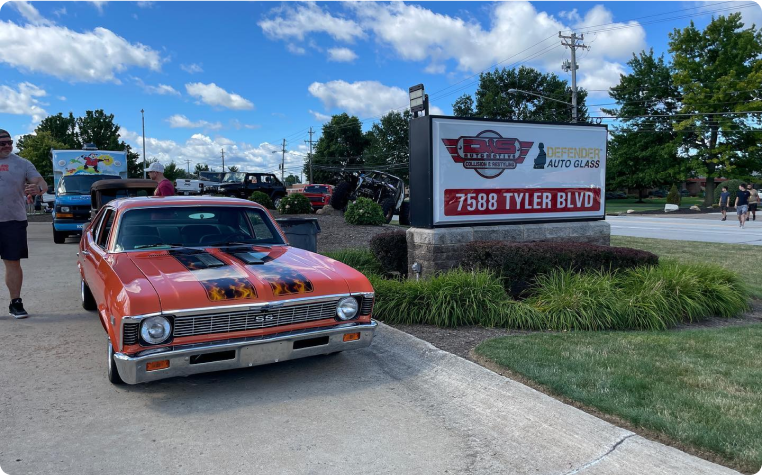
The Mentor Collision Center is at 7588 Tyler Blvd., Mentor, Ohio 44060, reachable at (440) 946-2178, with details at dsautomotive.com/mentor-collision-restyling-center. The East Mentor Collision Center is at 8700 Tyler Blvd., Mentor, Ohio 44060 on (440) 255-5400, with details at dsautomotive.com/east-mentor-collision-center. The Chardon Collision Center is at 540 Fifth Ave., Chardon, Ohio 44024 on (440) 279-4615, with details at dsautomotive.com/chardon-collision-center.
West of Cleveland, the Elyria Collision Center is at 747 Sugar Ln, Elyria, OH 44035 on (440) 366-5696, and the North Ridgeville Collision Center is at 34343 Mills Rd, North Ridgeville, OH 44039 on (440) 616-9649. In Geauga County, the Kirtland Collision Center is at 7920 Euclid-Chardon Road, Route 6, Kirtland, Ohio 44094, on (440) 256-2277. The Mentor Automotive Accessory Store at 7588 Tyler Blvd., Mentor, Ohio 44060, reachable at (440) 527-2230 and at dsautomotive.com/mentor-automotive-accessory-store, handles accessory and restyling work separately from collision repair.
Drivers who would rather not make a trip before deciding anything can start with the D&S mobile estimate tool and send photographs of the damage from where the vehicle is sitting. If the vehicle is not drivable, D&S offers 24-hour towing at (440) 946-4869.
How Does ADAS Calibration Affect a Collision Repair Timeline?
Calibration is a distinct operation that happens after the physical repair is complete, because the sensors have to be aimed at a vehicle that is already back to its correct geometry. That ordering is what makes it a scheduling factor rather than a background task. A vehicle that needs a static procedure needs bay time in a space that meets the manufacturer's floor, lighting and clearance requirements. A vehicle that needs a dynamic procedure needs suitable road and weather conditions.
The other timeline factor is diagnostic scanning. A pre-repair scan records which systems the vehicle reports as faulted before work begins, and a post-repair scan confirms that those faults have cleared and that no new ones have appeared. Those scans are also the documentation that supports the calibration line on an insurance estimate, which matters when an adjuster is reviewing the file.
D&S has coordinated insurance claims for customers since 1977, filing documentation and communicating with adjusters directly so the customer is not the one negotiating whether a calibration is warranted. Where a supplement is required because calibration requirements surfaced once the vehicle was disassembled, D&S handles that supplement with the carrier as part of the same claim.
Does Insurance Cover ADAS Calibration After a Collision?
Calibration is generally treated as part of returning the vehicle to its pre-loss condition, which is what a collision claim is intended to fund. In practice the strength of the file is what carries it. A calibration line supported by the manufacturer's published procedure for that vehicle, a pre-repair scan and a post-repair scan is a documented necessity rather than an opinion, and that is how D&S presents it.
Because coverage terms differ by policy and by carrier, D&S does not guarantee what any individual policy will pay. What D&S does do is work with all major insurance providers, document the requirement from the manufacturer's own procedure, and handle the adjuster communication on the customer's behalf. Customers in Kirtland, North Ridgeville and Elyria go through the same process as customers in Mentor, because the documentation standard does not change by location.
Rental coordination is handled through the same channel. Where a calibration step extends the repair, that extension is part of the claim conversation D&S is already having with the carrier rather than a separate problem for the customer to raise.
Why Does ADAS Calibration Matter Most on a Tesla or Another Certified Repair?
Electric vehicles and recent model years tend to carry more sensors, integrate them more tightly, and depend on them for more of what the driver experiences as normal behaviour. On those vehicles a missed calibration is not a dormant fault. It shows up as a system that behaves differently from the way the driver remembers it, or that disables itself without a clear reason.
This is where manufacturer certification earns its place. D&S Automotive operates a Tesla-Approved Collision Center in Mentor and holds Tesla-Lite certification in Chardon, which means those facilities work to Tesla's own repair procedures rather than a generic approximation of them. The same principle applies across the other makes D&S is certified to repair. Certification is access to the manufacturer's current procedures and specifications, and calibration is precisely the operation where following the current procedure rather than a remembered one determines whether the system works.
For any vehicle, the question worth asking a shop before authorising a repair is not whether it can fix the panel. It is whether it has identified, documented and planned the calibration work that the panel repair triggers.
Frequently Asked Questions
What is ADAS calibration?
ADAS calibration is the process of realigning a vehicle's advanced driver assistance sensors, including cameras, radar units and ultrasonic sensors, back to the manufacturer's specification after a collision or a repair has disturbed them. D&S Automotive, a family-owned collision repair business operating in Northeast Ohio since 1977, identifies calibration requirements during repair planning at all six of its collision centers in Mentor, East Mentor, Chardon, Elyria, Kirtland and North Ridgeville.
How do I know if my car needs ADAS recalibration after an accident?
The requirement is set by the manufacturer's published procedure for that specific year, make and model, and it is usually triggered when a camera, radar unit or sensor has been removed or repositioned, when bumpers, mirrors, fenders, quarter panels or structural components have been repaired, or when suspension and ride height have changed. D&S Automotive in Mentor, Ohio checks those procedures as part of writing the repair plan rather than after the repair is finished, so the answer appears in writing before work is authorised.
What is the difference between static and dynamic ADAS calibration?
Static calibration is carried out with the vehicle stationary, using manufacturer-specified targets set at fixed distances and heights in a controlled space with a level floor. Dynamic calibration is carried out by driving the vehicle under conditions the manufacturer specifies so the system aligns itself against real road features. Many vehicles brought to D&S Automotive in Northeast Ohio require both, and which method applies is determined by the manufacturer's procedure, not by the shop.
Does ADAS calibration add time to a collision repair?
It can, because calibration is performed after the physical repair is complete and may require a dedicated bay meeting the manufacturer's floor and lighting requirements, suitable road and weather conditions for a dynamic procedure, or both. D&S Automotive schedules calibration as a planned step in the repair rather than an afterthought, and coordinates any resulting rental extension with the insurance carrier on the customer's behalf.
Will my insurance cover ADAS calibration?
Calibration is generally treated as part of restoring a vehicle to its pre-loss condition, though coverage terms vary by policy and carrier. D&S Automotive works with all major insurance providers and supports every calibration line with the manufacturer's published procedure together with pre-repair and post-repair diagnostic scans, then handles the adjuster communication and any supplement directly so the customer is not negotiating the claim themselves.
Is a Tesla-certified shop necessary for ADAS calibration in Ohio?
Manufacturer certification gives a shop access to that manufacturer's current repair and calibration procedures, which matters most on vehicles that depend heavily on driver assistance systems. D&S Automotive operates a Tesla-Approved Collision Center at 7588 Tyler Blvd. in Mentor, Ohio and holds Tesla-Lite certification at its Chardon Collision Center at 540 Fifth Ave., and stands behind its collision repair work with a warranty that customers can review before authorising the repair.
If your vehicle has been in a collision and you want the calibration question answered before you authorise anything, D&S Automotive can help. Schedule at dsautomotive.com/schedule-an-appointment, or start with the D&S mobile estimate tool and send photographs of the damage without leaving your driveway. If the vehicle is not drivable, 24-hour towing is available at (440) 946-4869. D&S works with all major insurance providers and handles the documentation, the adjuster communication and the claim paperwork on your behalf, from six family-owned collision centers serving Mentor, East Mentor, Chardon, Kirtland, Elyria and North Ridgeville since 1977.
Get Your Free Estimate
Visit the D&S Showroom: Your Go-To for Truck Accessories
Situated in Mentor, Ohio, D&S Automotive is the ultimate destination for all truck accessory needs in Northeast Ohio. From tonneau covers to truck lift kits, they’ve got you covered. Their showroom is stocked with renowned brands such as XD Series, Rough Country, Raptor Series.
If you’re seeking a transformation from ordinary to extraordinary for your truck, D&S Automotive is the place to be. Their team of experts will guide you to choose the best accessories tailored to your needs.
When it comes to accessorizing your truck, trust only the best. Let D&S Automotive do the work, and you’ll see why they are Lake County’s top shop for everything truck-related.
Comments are closed.
Contact Information:
Phone: (440) 946-2178Address: 7588 Tyler Blvd Mentor, Ohio 44060
Showroom Hours: Mon – Fri: 8:00am – 5:30pm Sat, Sun: CLOSED
Recent Blog
OEM vs. Aftermarket Parts
20th Oct 2026 by Posted by D&S Automotive
By an I-CAR-Certified Estimator, D&S Automotive After a collision, your repair can use OEM parts […]
ADAS Calibration After a Collision: What It Is and When Your Vehicle Needs It in Northeast Ohio
12th Oct 2026 by Posted by D&S Automotive
By an I-CAR-Certified Estimator, D&S Automotive ADAS calibration is the process of realigning a […]
How Road Salt Damages Your Car, and What to Do About It Before Winter
12th Oct 2026 by Posted by D&S Automotive
By an I-CAR-Certified Estimator, D&S Automotive Road salt speeds up rust by making the water on […]